.png)


A request for startups, from someone who builds with AI every single day.
Building is free now.
Claude and Codex got so good that the question stopped being "can you build it?" It became "can anyone find it, and does it have any taste?"
So the bottleneck moved. The interesting question is no longer how to build - it's what.
At Hourglass, my whole job is basically to help companies get good at AI: we audit where their time goes, build a roadmap, then build and maintain the systems. So I get a front-row seat to the same manual work in company after company. That, plus a decade of backing founders, has given me a running list of the things I desperately wish existed.
Here it is. If you build one of these properly, come find me.
1. A real AI chief of staff
Not another inbox. Not an agent that pings me "hey, you got an email, want to reply?" - I already know I got the email.
I want one that has access to everything out of the box - computer, phone, the lot - and is genuinely proactive. It knows what I've done and what I've deliberately not done. It understands my past behaviour well enough to know whether I'd even want to act on a given email or action item. And then it just does the thing, the way I'd do it, and all I have to do is approve.
The bar isn't "summarise my inbox." The bar is "act like me."
2. AI brains that talk to other AI brains
This is the one I'd build.
Everyone is going to have a personal AI brain. Every company will have one too - we already run one at Hourglass. The magic isn't the brain. It's connecting two of them.
So often I just want my brain to talk to someone else's. Schedule the meeting. Answer their question with the right story and example. Let them understand how Hourglass works without me copy-pasting out of my own head into an email.
A VC who wants numbers from a portfolio company? Today they send a survey everyone hates and nobody fills in. Imagine instead tapping into a slice of that company's brain - as much as they've chosen to trust you with. Brain-to-brain, with permission, is a wild concept for trust and decision-making.
The hard part isn't the AI. It's making it as easy to spin up and connect as sharing a phone number, or tapping two phones together.
3. The unifier
We all use way too many AI tools. Claude, Codex, Replit, ten others.
Build me the one layer that unifies them - always reaches for the right tool for the job, manages the token usage, and runs 24/7 on a server so it's always on.
One place. Right tool, every time. Always working.
4. The token router
Related, but its own business: intelligent routing that uses the right model for the right task so your token costs don't explode. It right-sizes usage automatically and lets you steer it.
This is a massive business, and honestly one someone could ship quite quickly. The demand only goes one way.
5. The 24/7 watcher
An agent that lives on your computer, watches everything you do, and actually learns your behaviour. Then it comes to you: "you've dragged this same image into this same spot a hundred times - want me to just do that?"
It writes its own skills off the back of your real, repetitive, manual work. You can also just describe a task and it takes it over.
Most automation makes you go to it. This one comes to you.
6. The life layer
Everything above is digital. My life isn't.
Training, food, my kids' education, seeing family, work. Work is the one we always solve. The rest we wing.
I want something that sits holistically over my whole life - not just my digital footprint but my physical one too. Groceries to health to mindset to mental health to, honestly, philosophy. A layer for living a healthy, conscious life, not just clearing life admin.
Which one would I build?
Genuinely, I'd take all of them. But if you made me pick - the brains.
Every single person is going to have one. The prize is being the way they spin one up and connect it to everyone else's, as effortlessly as swapping numbers.
And here's the counterintuitive part:
The founder for that isn't an engineer.
You need to understand the engineering, sure. But the actual hard problems are psychology. How do you get something invisible into people's hands? How do you onboard it so it feels useful on day one? How do you make people share it? That's behavioural design, not a model. The unfair founder here is world-class at understanding why people share things - and making it dead simple.
The one I wouldn't fund
"AI that does your marketing."
There'll be a few front-runners and they'll all get crushed. Marketing is the one place where AI slop kills you, because the whole point of marketing is to be opinionated and stand out. The moment something works, everyone copies it, and it converges into the same beige mush.
That moat evaporates on contact. Hard pass.
It's the same reason we've never run Hourglass like a paid-ads hustle machine. The stuff that lasts is built on trust and reputation, and that's exactly the stuff AI can't mass-produce for you.
Why these are buildable now
Twelve months ago, most of this was a research project. Now? Claude and Codex are good enough that anyone can build almost anything, and the tools have spread exponentially. My genuine prediction is that every business becomes a productised service, customised by an agent the moment you onboard.
The proof these are real businesses and not just my wishlist: I see the demand in every Hourglass audit. The same manual work, in every single company - answering emails, hunting for information, filling in forms, sending quotes and invoices, punching things into the accounting system, building board decks and presentations, finding the right number, wiring up dashboards and reporting.
That's not a niche. That's every knowledge worker alive.
The building is solved. Go win the distribution.
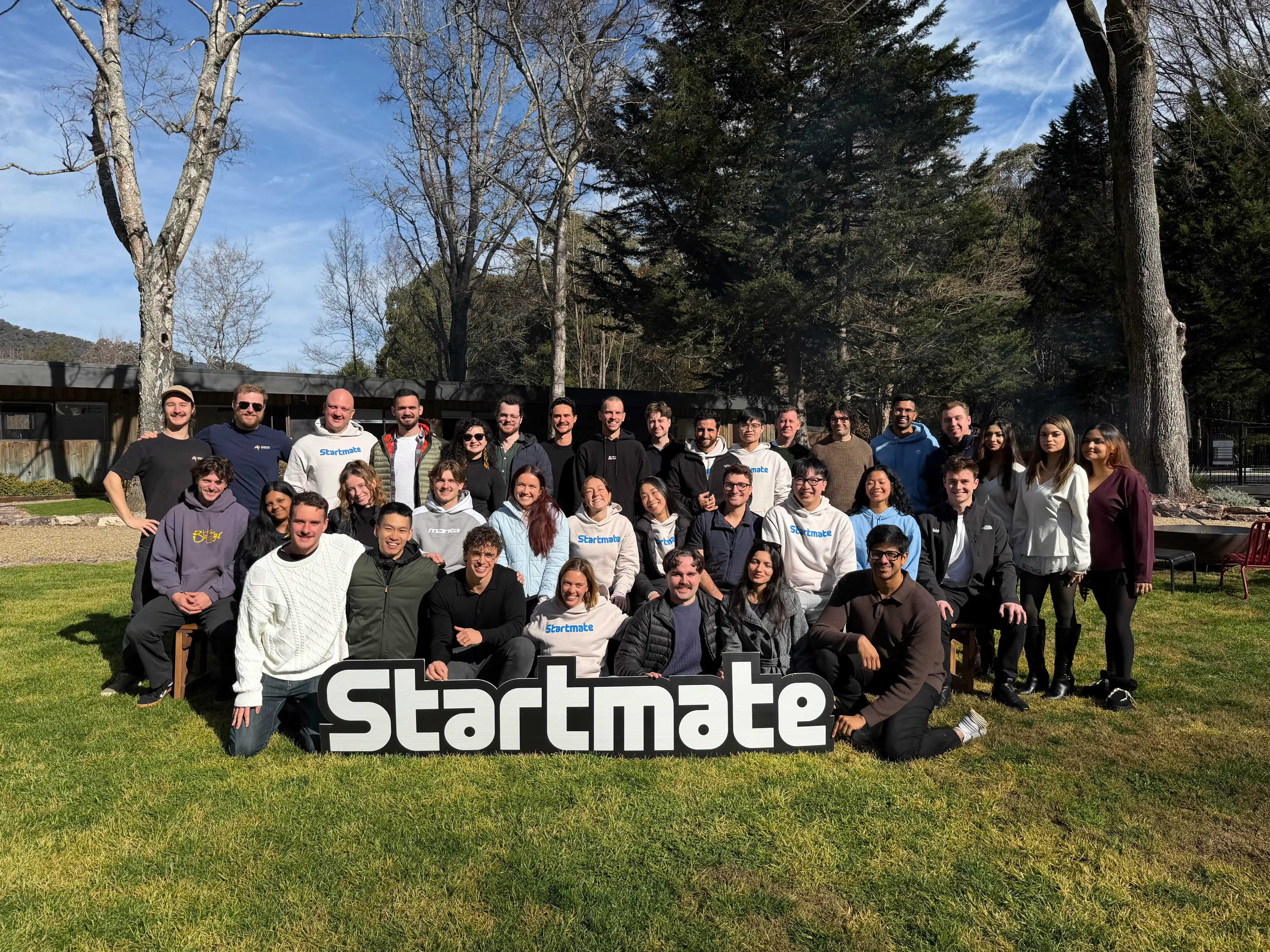
Michael Batko spent nearly a decade as CEO of Startmate, where he backed 250+ startups. He now runs Hourglass AI (thehourglass.ai), an AI consulting services and implementation partner that helps companies find and automate their manual work.
.webp)

.png)