

If you walk along a factory production line, everything usually looks like it’s working as it should. Machines are running, output is moving, and nothing appears obviously wrong. It’s only when you spend more time watching that you begin to notice the subtle changes. A process shifts slightly, a material behaves differently, or something that looks almost right starts to move out of place.
Those changes are easy to overlook, especially when the priority is keeping the line running. But they don’t stay small. Over time, they build on each other, and what begins as a minor variation can turn into defective output or bring production to a halt entirely.
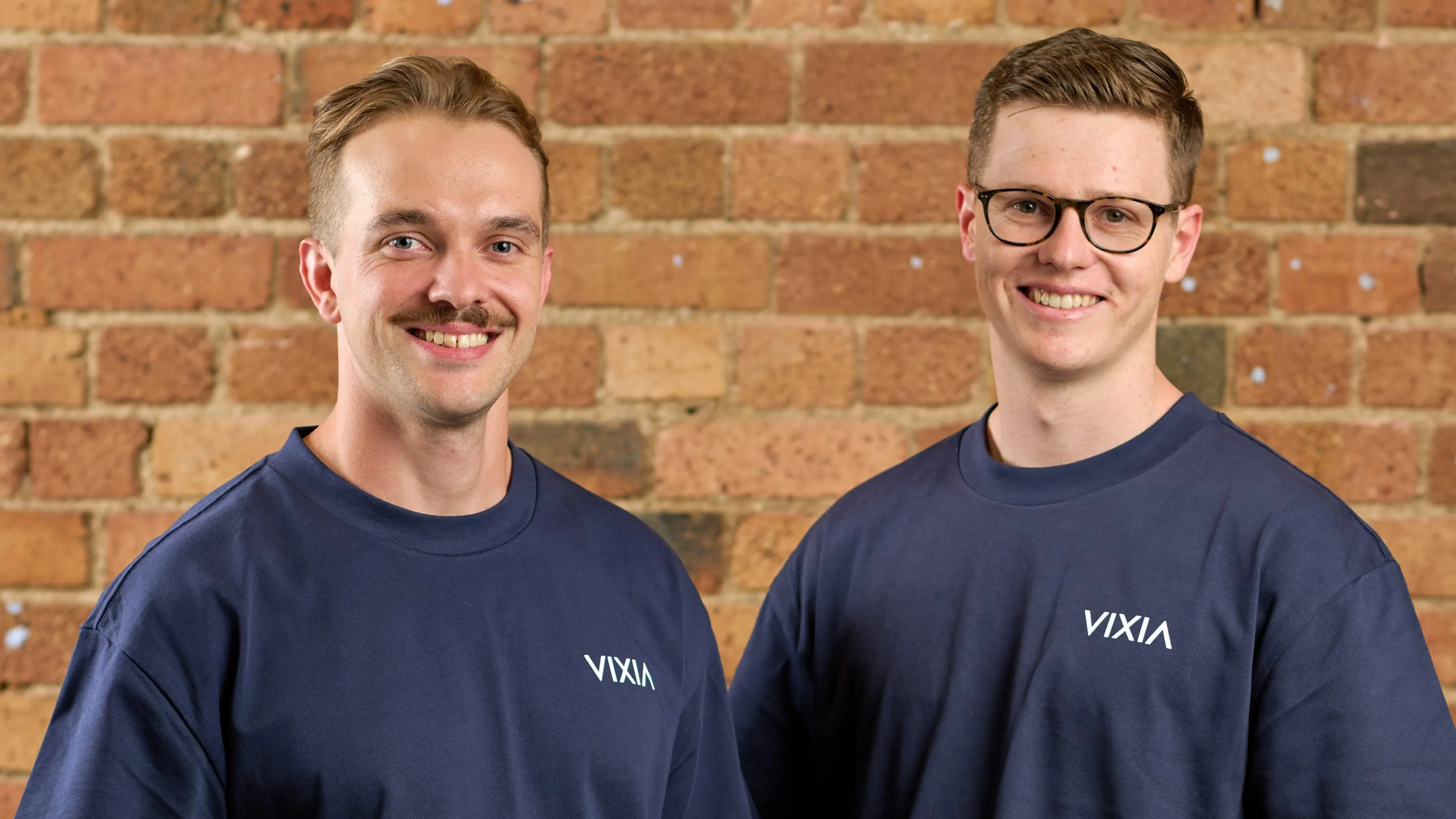
For Storm Drury and Matt Eyles, this wasn’t something abstract. It was part of their day-to-day experience while working on a solar manufacturing line that was scaling quickly and constantly evolving. Getting that system to a 99.7% yield required close attention to how it behaved in real conditions, not just how it was designed to operate. Much of that responsibility sat with operators, who had to watch for anything that seemed out of place and step in before problems spread.
The difficulty was that not every issue followed a predictable pattern. New defects would appear, environmental conditions would shift, and the line would behave differently from one run to the next. It wasn’t just a matter of spotting known problems, but of recognising when something unfamiliar was starting to go wrong.
The insight: most problems aren’t caught in time
Modern manufacturing is highly automated, but monitoring still depends on a mix of human attention and rigid systems.
Human operators are good at catching obvious issues, but subtle changes are easy to miss, especially over long periods. Traditional machine vision systems can detect known defects, but they rely on pre-training, which makes them slow to adapt when conditions change or new issues appear.
The result is a gap where many problems begin but aren’t caught early enough. Small variations go unnoticed until they’ve already affected output, at which point the cost is much higher, whether that’s scrapped product or downtime across the line.
What Storm and Matt recognised was that the issue wasn’t a lack of effort or attention. It was that the system itself didn’t have a reliable way to see these changes early enough.
Catching issues before they become problems
Vixia is built to detect those changes earlier, while they’re still small and easier to correct.
The system uses cameras to monitor production lines in real time, identifying when something starts to move outside its normal pattern. Instead of waiting for a defect to fully form, it surfaces early signals that something is drifting, giving operators a chance to step in before the issue escalates.
Because it learns from feedback, it doesn’t rely on seeing the same problem twice. As operators interact with it, the system becomes better at understanding what matters on that specific line, even as materials, lighting, and conditions change.
For teams, that shifts monitoring from reactive to proactive. Instead of responding to defects after they appear, they can prevent them from forming in the first place.
Built from experience rather than assumption
Vixia reflects the way Storm and Matt have worked together.
They met while scaling that same solar manufacturing system, one focused on process, the other on technical systems. Scaling production under pressure required constant adaptation, especially when the system didn’t behave as expected. That experience shaped how they approached the problem.
Instead of designing for stable and predictable environments, they built for variability. For production lines that change over time, where conditions are not perfectly controlled, and where the cost of missing a small issue can be significant.
When it started to click
The shift from concept to something tangible came when the system was deployed in a live facility.
Within weeks, they went from outreach to running a pilot, and the response from operators was immediate. They didn’t need convincing about the problem. They were already dealing with it every day.
What stood out for users was how early the system could surface issues and how much more confidence it gave them in deciding when to act.
Looking ahead
Vixia is starting with monitoring, but the direction is broader.
The goal is to create a real-time perception layer across the factory floor, where systems don’t just detect issues, but help prevent them entirely. As that layer becomes more reliable, production moves away from reacting to problems and toward avoiding them.
Because once problems can be seen early enough, preventing them becomes part of how the system operates.
The ask
If you have experience in manufacturing, whether on the factory floor or at a leadership level, the Vixia team would love to hear from you.
You can learn more at vixia.ai
Watch them pitch at Demo Day
When: Thursday, 30 April @ 7:00 PM (pre-party starting at 5 PM)
Where: Carriageworks (at the close of Blackbird's Sunrise Festival)
What: Pitch night (19 companies)
Tickets: Grab your ticket here


.png)
.png)